
From Typography to Tone: How to Create a Brand Voice
It's paramount to create a brand voice for connecting with your audience. From choosing the right typography to setting the tone of your messaging, every element plays a crucial role in shaping your…
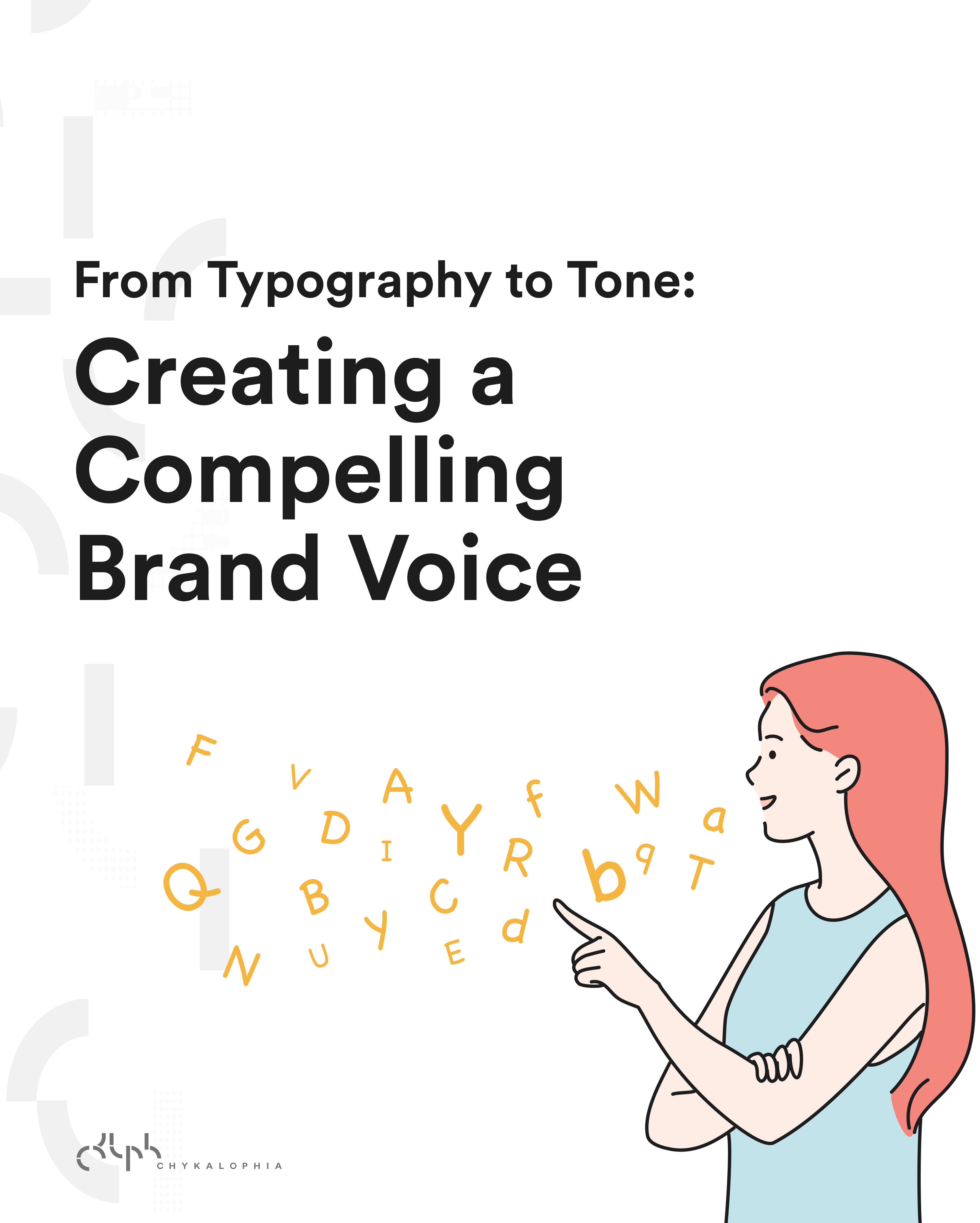
It's paramount to create a brand voice for connecting with your audience. From choosing the right typography to setting the tone of your messaging, every element plays a crucial role in shaping your brand identity.
Let's delve into the intricacies of coming up with a brand voice that resonates with consumers, exploring the science behind consumer decision-making and its impact on overall marketing effectiveness.
The psychology behind branding
Understanding the science behind consumer decision-making is like having a key to unlock the minds of your target audience. Consumers are not just making rational choices based on product features because 95% of purchase decisions are made subconsciously. They are influenced by emotions, perceptions, and the overall brand experience.
Typography as a silent communicator
Your choice of typography is not only a matter of beauty and aesthetics. It's a silent communicator that conveys the personality of your brand.
Different font styles can evoke different emotions. For example, serif fonts may project timelessness and reliability, while sans-serif fonts can suggest modernity and simplicity. The key is aligning your typography with the essence of your brand.
Crafting the right tone for your brand voice
While typography sets the visual tone, your brand voice is the auditory counterpart. Even from written words on your webpage or social media post, your audience can still "hear" your voice in their mind. Brand voice is the way you speak to your audience, and it must be consistent across all touchpoints.
Defining your brand personality
Your brand personality is the unique set of characteristics and traits that define how your brand is perceived by your audience. Before delving into crafting your brand voice, it's essential to clearly outline and understand your brand's personality.
Think of your brand as a person – how would you describe it? Is it authoritative, friendly, innovative, playful, or perhaps a combination of these traits?
Consistency is key
Consistency involves maintaining a uniform tone, language, and messaging across all touchpoints, creating a seamless and recognizable brand experience. It is not just about repetition, though, it also helps you build trust, reinforce your brand identity, and instantly allow people to recognize your brand.
The impact of brand voice on marketing effectiveness
Creating a compelling voice has a direct impact on marketing effectiveness. The way your brand communicates sets the stage for how audiences perceive, engage, and ultimately choose to connect with your business. People are more likely to engage with brands that speak their language, understand their needs, and evoke the right emotions.
Building emotional connections
Emotions play a significant role in consumer decision-making. A well-crafted voice can evoke the right emotions, building a strong emotional connection with your audience. And when consumers feel a personal and emotional tie to your brand, it goes beyond a transactional relationship. It becomes a shared experience, fostering a sense of belonging and loyalty.
Increasing brand loyalty
When consumers encounter a brand that consistently speaks to them in a way that aligns with their values and preferences, it fosters a sense of trust and reliability so they're more likely to become repeat customers and even promote your brand to their friends.
Your customers are happy, and you get free word-of-mouth marketing. It's a win-win!
Your audience hears your voice even when they are only reading it.
Practical steps to create a brand voice
Now let's get over the theoretical exercise and get into the hands-on process of creating a brand voice. This process requires strategic planning and practical implementation. Here are actionable steps to guide you through the creation of a compelling voice that resonates with your target audience:
Audience research
Conduct in-depth audience research to understand the preferences, values, and language of your target audience.
To do this, you can use surveys, social media analytics, and direct customer feedback to gather insights into what matters most to your audience. Identify common language patterns and the tone that resonates with them.
How to do it
- Pull 5 to 10 recent customer emails or reviews and highlight the exact words they use.
- Field a short survey in Typeform or Google Forms asking how they'd describe the problem in their own words.
- Run the audience through SparkToro to see whose podcasts, sites, and accounts they already trust.
- Note the recurring phrases and whether their register leans casual or formal.
See a worked example
For example, a boutique accounting firm serving freelancers might field a five-question survey and notice clients keep using a phrase like "I just don't want to think about it," a signal that the voice should be reassuring and jargon-free rather than technical.
Tools to use
SparkToro to see which podcasts, sites, and accounts your audience already trusts, Typeform for a short conversational survey, and Google Forms for a free quick survey.
Steal our AI prompt
You are a brand strategist. Here are raw customer quotes, reviews, and survey answers from my audience: [paste]. Cluster them by theme, then list the 10 exact words or phrases my customers use most, the emotion behind each, and whether the overall register leans casual or formal. Flag any jargon they use that I should mirror. My business is [describe].
Define brand attributes
Clearly define the key attributes of your brand personality. Is your brand playful, sophisticated, or down-to-earth? Host internal discussions to pinpoint the core attributes that align with your brand's identity as a business and company. Consider how you want your audience to perceive your brand and translate these perceptions into certain characteristics.
How to do it
- Dump every adjective the team throws out for the brand onto a shared Miro board.
- Cluster the sticky notes and force a shortlist of three to five attributes.
- Pressure-test the shortlist against the 12 brand archetypes.
- Write one sentence per attribute defining what it means and what it does not mean.
See a worked example
As an example, a team stuck between "authoritative" and "approachable" might land on three attributes such as warm, plainspoken, and quietly confident after mapping them against the Sage and Everyman archetypes, then use that third attribute as the tie-breaker for future copy calls.
Tools to use
Miro templates to run a collaborative attribute-sorting workshop, and the Iconic Fox brand archetypes guide to anchor personality traits.
Steal our AI prompt
Act as a brand voice consultant. My brand is [describe: what we do, who we serve, how we want to be seen]. Here is a raw list of adjectives my team brainstormed: [paste]. Cluster them, remove overlaps, and propose three to five core brand attributes. For each, give a one-line definition, what it looks like in practice, and what it explicitly is NOT. Then name the closest brand archetype.
Develop a style guide
Create a comprehensive style guide that provides clear guidelines on language, tone, and messaging for your organization.
Document specific language choices, preferred tone variations, and messaging do's and don'ts. Ensure that this guide is accessible to all team members involved in content creation. The style guide serves as a reference point for maintaining consistency in all brand communications.
How to do it
- Turn each attribute into a we-say / we-don't-say table with two real example sentences per side.
- Add plain rules for grammar, formatting, and the words you avoid.
- Host it somewhere everyone can reach in Frontify, Notion, or a shared doc, not a buried PDF.
- Model the depth on a public guide like Mailchimp's before you overbuild it.
See a worked example
For instance, a two-page guide might make "warm" concrete with a we-say / we-don't-say line: say "Here's what we'd do next," not "Per our previous correspondence." That turns an abstract attribute into a rule a new writer can apply on day one.
Tools to use
The Mailchimp Content Style Guide as a real public model, and Frontify to host a living brand guide the whole team can reach.
Steal our AI prompt
You are a content designer writing a brand voice style guide. My three to five brand attributes are: [paste]. For each attribute, produce a "we say / we don't say" table with two real example sentences per side, written for a [describe channel: e.g. support email]. Then list five words or phrases we should avoid and the reason for each.
Test and iterate
Implement your brand voice in various content formats, such as social media posts, blog articles, and email campaigns. Collect feedback from your audience through surveys, comments, and direct interaction, then adjust the elements of your voice based on audience response.
How to do it
- Rewrite one real asset, like a welcome email or your about page, in the new voice.
- A/B test two registers on a Mailchimp campaign and watch open and click rates.
- Collect direct reactions with a short Typeform.
- Keep what tests well, cut what feels forced, and fold the changes back into the guide.
See a worked example
As an example, you might run one offer with two subject lines, a warm "A quick idea for your Q3" and a formal "Q3 planning recommendations," and let the open and click rates hint at which register your list actually responds to before rolling the voice out more widely.
Tools to use
Steal our AI prompt
Rewrite the following copy in my brand voice. My voice attributes are: [paste attributes]. Here is the original text: [paste]. Give me two versions in slightly different registers so I can A/B test them, and note which type of reader each version is likely to resonate with more.
Monitor and adjust
Continuously monitor the effectiveness of your brand voice to adapt to shifting consumer expectations. You can do this by setting up regular reviews of key performance indicators (KPIs) related to brand communication. Track engagement metrics, customer feedback, and brand sentiment.
How to do it
- Set up Google Alerts and a Brand24 project for your name and key terms.
- Pick two or three KPIs to watch each quarter, such as reply rate, sentiment, and engagement.
- Skim mentions and support replies for places the voice slipped out of character.
- Update the guide whenever audience language or expectations shift.
See a worked example
For instance, a quarterly review might trace a spike in negative sentiment back to a stiff, templated support reply that broke from the brand's usual warmth, which then prompts a rewrite of the canned responses so the voice stays consistent everywhere.
Tools to use
Google Alerts for free brand-mention monitoring, and Brand24 for social listening with sentiment tracking.
Steal our AI prompt
I review my brand voice quarterly. Here are recent brand mentions, support replies, and social posts: [paste]. Tell me where the tone drifts from my defined voice attributes ([describe attributes]), flag the specific sentences that feel off-brand, and suggest on-voice rewrites for each.
Brand voice is the compass for your communication
Building a brand voice is a strategic process that involves understanding the psychological aspects of consumer decision-making. By aligning your typography and tone with the essence of your brand, you will create a powerful brand voice that not only attracts but also forms lasting connections with your audience.
Want a head start? Our free brand voice worksheet walks you through the decisions step by step, and our branding work takes it from there.
Keep reading
 Branding & Digital Marketing
3 Questions to Answer to Maintain Your Brand Consistency
When you start your brand by yourself, it's fairly easy to maintain brand consistency. After all, your brand most likely comes from your personal values. Then come customers and more customers and…
 Branding & Digital Marketing
How to Create a Tagline: Successful Brand Tagline Formula
Struggling to find out how to create a tagline? We get that. Crafting a few limited words to represent your entire business is not exactly an easy task. There is a way to make it easier, though, so…
 Branding & Digital Marketing
Logo Debranding: What Is It & Why Are Companies Debranding?
This article talks about logo debranding, a marketing term that created a buzz around April–May 2022, as well as debranding examples from big, well-known global companies. A new term, debranding, has…
See exactly where your site is losing conversions
Paste your URL and get an instant conversion score. No form to fill out, no sales call.
Weekly strategies for businesses building what's next.
The Next Draft: one email a week on turning B2B websites into pipeline. No fluff, unsubscribe anytime.