
Sensory System Marketing: Leveraging the 5 Senses for Digital Marketing
Did you know that you can use the five human senses in your business? Read on to learn about sensory system marketing and the examples of how you can leverage it to grow your business. Marketing…
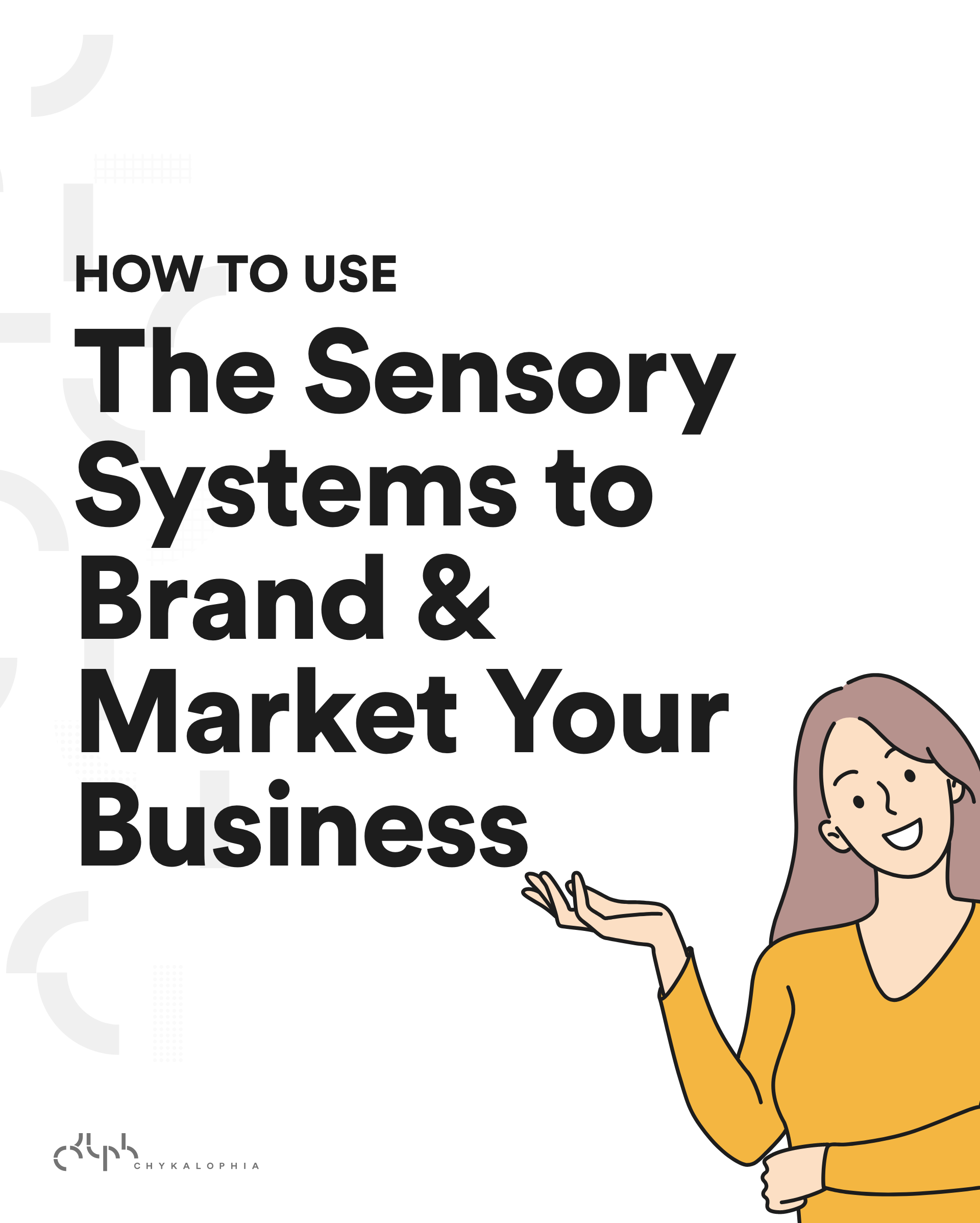
Did you know that you can use the five human senses in your business? Read on to learn about sensory system marketing and the examples of how you can leverage it to grow your business.
Marketing strategies have no limit!
If we look closer at the most basic human needs, psychology, and interactions, there are many ways we can tap to market our business. For example, we can utilize the five love languages for marketing, which we have covered in this article.
Following the spirit, let’s talk about sensory system marketing.
Yes, we can use our basic human senses to market our business.
Although, some of you might wonder, “I’m running a digital business, how is it possible to do sensory marketing?”
Worry not, most of our clients are also digital companies and we’re going to give examples of digital sensory system marketing for your perusal.
Even a screen can hint at taste, sound, and smell, if you cue the other senses.
What is digital sensory system marketing?
Most of us are blessed with five senses that help us go about our days and enjoy life to the fullest. We have:
- 👀 Sight
- 👅 Taste
- 👐 Touch
- 👂 Hearing
- 👃 Smell
Let’s see how you can utilize each sense to amplify your marketing strategy.
Sight 👀
Humans are visual creatures. For most people, sight is the primary sense for taking in something new, including brands and marketing, which is why a strong visual identity does so much of the work of recognition.
You can help your audience recognize your brand when they see something even remotely close to it through your choice of:
- Colors
- Graphics
- Images
- Font types
- Videos
- Layouts
...And basically anything that the eyes can see!
How to do it
- Lock a 3 to 5 color palette in Coolors and save the hex codes as your single source of truth.
- Check the palette for contrast and color-blind safety in Adobe Color before you ship it.
- Pair one heading font with one body font in Google Fonts and resist adding more.
- Apply the same palette and pair to every image, icon, and button so the look repeats everywhere.
See a worked example
For example, a SaaS onboarding page might lock a three-color palette (one dominant, one accent, one neutral) plus a single heading and body font pairing, then apply them to every screenshot, icon, and button so a returning visitor recognizes the brand before reading a word. This is an illustration of consistency, not a measured result.
Tools to use
Coolors to lock a reusable palette, Adobe Color to check contrast and accessibility, and Google Fonts to pair type.
Steal our AI prompt
You are a brand designer. Here is my business and audience: [describe your product, who it serves, and the feeling you want it to signal]. Here are colors or references I already like: [paste hex codes, image links, or competitor names]. Propose two distinct visual directions, each with a 3 to 5 color palette (hex codes), one heading plus one body font pairing available on Google Fonts, and a one-line rationale for how the direction signals the brand. Flag any contrast or accessibility risks.
Taste 👅
If your business belongs to the food and beverage industry, the sense of taste is a piece of cake, quite literally.
You can give out free samples in the supermarket or at a pop-up bazaar, hold a giveaway on your social media, send an extra freebie for every purchase, or display mouth-watering product pictures on your digital and non-digital marketing assets.
Other industries, however, require more creative approaches. If we’re thinking out loud, here are a few things you can do to nudge the taste bud when marketing your digital products or services:
- Display fruit images 🍎🥝🍓 to convey fresh feelings, or nature images 🌲⛰️🍂 to be perceived as calm and serene
- Choose brand or product colors that are associated with food such as matcha, pomegranate, or chocolate 🍫
- When you send your customers’ orders, give out edible freebies (like candies or marshmallows) to create a sweet perception.
How to do it
- Pick one taste association you want (fresh, indulgent, calm) and one matching color family.
- Pull high-res food or nature imagery from Unsplash or Pexels that carries that feeling.
- Compose the hero or social graphic in Canva using that palette and imagery.
- If you ship physical orders, add one small taste-themed touch like a wrapped candy.
See a worked example
For example, a project-management app has no literal taste, but a landing hero built around ripe-citrus and fresh-herb photography with a matcha-green accent can read as fresh and energetic rather than clinical. Treat this as an illustration of association, not a proven conversion lift.
Tools to use
Steal our AI prompt
You are a brand marketer. My product is [describe product and audience]. I want it to feel [pick a taste association, e.g. fresh, indulgent, calm]. Suggest 8 concrete visual and copy cues to evoke that taste without literally being food: color families, image subjects to search on Unsplash or Pexels, and 3 short headline options. Flag any cue that could feel forced for a [my industry] brand.
Touch 👐
The sense of touch can be easily implemented in brick-and-mortar stores, where people can literally touch and even try your products. Yet, it might be a bit tough if your business mostly runs on digital.
Worry not, though. Here are a couple of tricks from us:
Create a seamless UI
While your customers are not able to interact directly with your products or services, their interactions with your website, mobile app, and social media accounts play a very important role in the overall user journey.
And you can make every click, touch, and swipe a part of a great overall experience for your users. Optimize the flow map of your website and app, test every button and link to make sure they function properly, and pay attention to how you narrate your message on your social media.
Exciting post-online interactions
Even if you market your brand on digital platforms, you can still kindle the sense of touch through the physical packages you send to your customers.
Whether you sell products like clothing or gadgets, or you provide services and you want to send out a thank-you hamper, invest some time and budget to create thoughtful packaging that provides a delightful unboxing experience.
How to do it
- Install Hotjar or Microsoft Clarity and watch real click, tap, and scroll behavior on your key flow.
- Run a quick task-based test in Maze to see where people stall before you commit to a redesign.
- Fix the friction you observe: tap-target size, button labels, and step order.
- For physical sends, design branded packaging with noissue so the unboxing matches the digital experience.
See a worked example
For example, before redesigning a checkout, a team might watch 20 real session recordings, notice thumbs hesitating over a mis-sized "apply code" field on mobile, and catch rage clicks there. The specific number here is illustrative, not a benchmark.
Tools to use
Steal our AI prompt
You are a UX researcher. Here is a description or screenshot of my page or flow: [paste or describe it]. List the 10 most likely friction points for touch and interaction on mobile and desktop (tap targets, gesture clarity, button labels, step order), ranked by likely impact. For each, give the specific thing to test in a tool like Hotjar or Maze and a suggested fix.
Hearing 👂
Some sounds just stick to certain brands, don’t they? To name a few:
- Apple’s keyboard clicking sound
- Windows’ starting up sound
- Netflix’s intro sound
That being said, you may want to set aside some budget to hire a freelance sound maker or producer to establish your brand’s particular tune, be it a full-blown jingle, a musicalized tagline, or a catchy tone to pronounce your brand name.
How to do it
- Decide the one moment your sound should own: an app success cue, a video sting, or a spoken brand name.
- Brief a freelance sound maker on Fiverr or a producer on SoundBetter with references and where it will play.
- If you only need background beds and stings, license them from a library like Artlist instead of commissioning.
- Test the sound at real volume on phone speakers before you roll it out.
See a worked example
For example, a fintech app might commission a two-second cue that plays on a successful transfer, plus a matching note used across its explainer videos, so the sound alone starts to signal "done safely." This is an illustrative use, not a claim about recall rates.
Tools to use
Fiverr to hire freelance sound makers, SoundBetter for professional producers, and Artlist for royalty-free music to license.
Steal our AI prompt
You are a sonic branding consultant. My brand is [describe brand, personality, and where the sound will play: app cue, video intro, name pronunciation]. Suggest 3 distinct directions for a short audio signature (mood, instrumentation, length, tempo) and, for each, a plain-language brief I could hand to a producer on SoundBetter or Fiverr. Note where a royalty-free library track would be good enough instead of a custom commission.
Smell 👃
The sense of smell can also be challenging for digital sensory system marketing. But, similar to taste, you can play around with images or music to incorporate the desired smell into your branding and marketing strategy.
For example, you can display images of flowers like lavender or rose 🌹 on your website. Or you may also want to add the sound of waves 🌊 to your videos for people to recall the salty air of the ocean.
Meanwhile, perfumes and room fragrances are your best friends when it comes to building the sense of smell in offline services and stores.
How to do it
- Name the scent you want people to imagine (citrus, sea air, fresh linen) and its source images.
- Source that imagery from Pexels or Unsplash and place it where attention lands.
- Layer a matching ambient sound from Freesound, like waves or rain, into videos or product pages.
- For physical spaces, set a single subtle signature scent with a service like ScentAir.
See a worked example
For example, a wellness brand with no storefront might pair lavender and eucalyptus imagery with a soft ocean-wave bed under its videos to cue a clean, calm scent memory, while a boutique diffuses one matching signature scent in its lobby. Treat the cross-sense link as suggestive, not guaranteed.
Tools to use
Steal our AI prompt
You are a sensory branding strategist. My brand is [describe brand and the mood or scent you want associated, e.g. sea air, fresh linen, warm vanilla]. Suggest how to evoke that scent for a mostly digital audience: 5 image subjects to search on Pexels, 3 ambient sound ideas to find on Freesound, and where on the site to place each. Add one option for a physical touchpoint if I have a store or ship products, and flag anything that risks feeling heavy-handed.
Do you need to use all 5 senses of marketing?
To tell the truth, one sense alone can enhance the others. For example, seeing a picture of orange makes you feel fresh and healthy, and it makes you smell citrus at the same time. You can also play around with 2-3 senses at a time.
Avoid using all five senses altogether, though. That would make your digital sensory system marketing too overdone and overwhelming.
Keep reading
 Branding & Digital Marketing
Unraveling 5 Secrets of Consumer Buying Decision Process
Does your business face the challenge of capturing the attention and loyalty of consumers? Understanding the intricacies of the consumer buying decision process is crucial for creating effective…
 Branding & Digital Marketing
Can Social Media Make You Money? 5 Social Media Branding Myths to Debunk
Have you ever invested in social media branding, content, and marketing only to find your efforts falling short of driving sales? Despite gaining followers, likes, and interactions, the financial…
 Branding & Digital Marketing
How To Enhance Your Marketing Videos Easily With AI Video Editing Software
With all the buzz about artificial intelligence, have you heard about AI video editing software? "The development of AI is as fundamental as the creation of the microprocessor, the personal computer,…
See exactly where your site is losing conversions
Paste your URL and get an instant conversion score. No form to fill out, no sales call.
Weekly strategies for businesses building what's next.
The Next Draft: one email a week on turning B2B websites into pipeline. No fluff, unsubscribe anytime.