
How to Bring Your Product Idea to the Market: 5 Expert Tips for First-Time Business Owners
If you have an idea to create amazing products to sell, you’ve come to the right place. We’re going to tell you how you can bring your product idea to the market. Check out the five expert tips from…
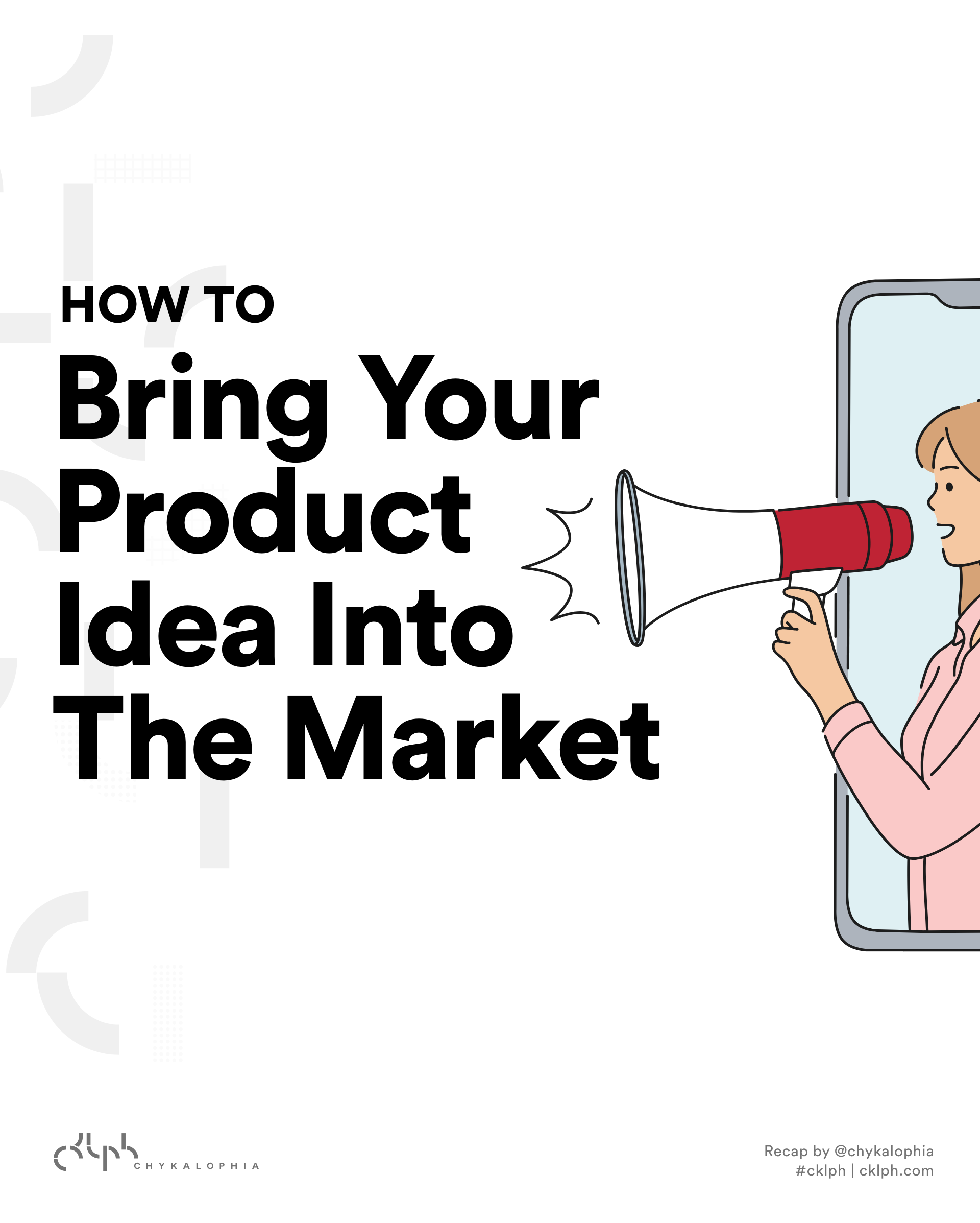
If you have an idea to create amazing products to sell, you’ve come to the right place. We’re going to tell you how you can bring your product idea to the market. Check out the five expert tips from Valerie Trent of Lee London Design, which can be especially useful if you’re a first-time business owner.
It might sound cliché, but what’s the point of having great ideas if they’re only in our heads, right?
There are a lot of debates and discussions about this, but many experts and observers believe that ideas are cheap, and executions are expensive.
So, what do you have to do to transform your intangible ideas into products that people can actually use?
Let’s find out how to bring your product idea to the market, especially if you’re a first-time business owner.
Ideas are cheap. The market only ever pays for the execution.
From Your Head to Reality: Taking Your Product Idea to the Market
A partner and colleague of ours, Valerie Trent, the Founder and CEO of Lee London, has helped us compose this article. As an expert in executing the process of taking products to market as well as market strategy, Valerie is no stranger to bringing product idea to the market.
Here are her five steps for turning ideas into products that you can apply to your business.
Survey your audience
Before you start anything else, research your audience so you don’t waste hours and thousands of dollars later.
Let’s say you want to create reusable, eco-friendly period pants. Here are some questions you can ask in your survey:
- Who would want to buy and use them?
- What kind of materials do they want?
- How many sizes and colors should be available?
- How much would they spend on buying these pants?
- How often would they repeat their purchase?
How to do it
- Write 5 to 7 questions that each map to a real decision: price, size range, reorder frequency.
- Build it free in Google Forms or Typeform and keep it under 3 minutes.
- Recruit where your buyer already gathers (a subreddit, a Facebook group, your list), not friends and family.
- For a larger, less biased read, buy responses through SurveyMonkey's audience panel.
See a worked example
As an example, testing those eco-friendly period pants with a 6-question survey sent to 40 people in a relevant subreddit or your email list might surface that most would pay $18 to $25 and reorder every few months, which is enough signal to sanity-check pricing before you commit to a manufacturing run. Treat any single small sample as directional, not proof.
Tools to use
Google Forms for a free builder that exports to Sheets, Typeform for one-question-at-a-time surveys that lift completion, and SurveyMonkey for a paid panel when you need respondents you don't already have.
Steal our AI prompt
Act as a market researcher. My product is [describe product in one sentence] aimed at [describe target buyer]. Draft a 6-question audience survey that tests willingness to pay, preferred features, sizing or variants, and reorder frequency. Use neutral, non-leading wording, mix multiple-choice with one open-ended question, and keep completion under 3 minutes. Then list 3 places online where this buyer already gathers so I can recruit respondents.
Do your due diligence
What is a trademark? What’s copyright? If you don’t know the difference between the two yet, dedicate some to learning about them and how they could affect your upcoming business.
There are also other terms you should get familiar with. You can start by Googling them or asking your legal consultant right away. Either way, these properties can be an asset or distraction depending on your products.
- Patent Search
- Mechanical Patent
- Design Patent
How to do it
- Search your proposed brand name and logo in the USPTO trademark database before you print anything.
- Search existing utility and design patents for your product's mechanism in Patent Public Search.
- Register the original artwork, photos, and copy that matter at copyright.gov.
- If anything looks close, spend an hour with an IP attorney before you scale.
See a worked example
As an example, before locking in an eco-friendly underwear brand name you might run it through the USPTO trademark database and find a live registration in the apparel class, which is a strong signal to pick a different name now rather than after you have printed packaging. A quick trademark, patent, and copyright check early is usually far cheaper than an infringement letter later.
Tools to use
USPTO Trademark Search to check whether your name or logo is taken, USPTO Patent Public Search for similar utility and design patents, and the U.S. Copyright Office to register your original artwork and copy.
Steal our AI prompt
You are an IP-savvy paralegal (not a lawyer, and this is not legal advice). My product is [describe product] and my working brand name is [paste name]. Explain in plain English the practical difference between a trademark, a utility patent, a design patent, and copyright as each applies to this product. Then give me a step-by-step pre-filing checklist of free searches to run and the red flags that mean I should call an attorney.
Find the right materials for your products
Bad materials mean a bad customer experience.
One easy trick to find the best materials for your products is by buying from several competitors. You can then test the feels, colors, and weight, and figure out which ones would suit your products best.
After finding out what you want, you can talk to an expert on how to manufacture such materials.
How to do it
- Buy 3 to 4 competitor products and compare feel, weight, durability, and finish directly.
- Shortlist suppliers on Thomasnet or Maker's Row for North American makers, or Alibaba for overseas.
- Request paid samples and a small test order before committing to a full run.
- Ask each supplier about minimum order quantities, lead times, and material certifications.
See a worked example
For instance, ordering the same product from three or four competitors and comparing weight, stitching, and hand-feel side by side often reveals which supplier tier you actually need, and sometimes the mid-priced sample holds up better than the most expensive one. Buying a handful of samples is usually cheaper than discovering a material problem after a full production run.
Tools to use
Thomasnet for vetted North American suppliers, Maker's Row for US apparel and sewn-goods factories, and Alibaba for global sourcing and factory-direct samples.
Steal our AI prompt
Act as a sourcing manager. I am making [describe product and its key material]. List the 5 most important material and construction specs I should evaluate, the questions to ask each supplier (MOQ, lead time, certifications, defect rate), and a simple scoring rubric to compare 3 to 4 samples side by side. Format the rubric as a table I can paste into a spreadsheet.
Map out your timeline
Did you know that it can take around 2 to 6 months to create the custom tools to create your products? That’s quite a long time and it doesn’t even include the other R&D phases, such as choosing materials, designing, and testing.
Plan accordingly and set some backup period in case something gets delayed and stuff.
How to do it
- List every phase: research, design, tooling, sampling, testing, packaging, launch.
- Put them on a Gantt chart in TeamGantt or Instagantt so dependencies are visible.
- Add a realistic buffer (a common rule of thumb is 15 to 25 percent) to each phase, not just the end.
- Flag the long-lead items first (tooling, certifications) since they gate everything else.
See a worked example
As a rough illustration, if custom tooling alone can run 2 to 6 months, a first physical product might realistically take 9 to 12 months from sketch to shelf once you add sourcing, sampling, testing, and revisions. Building in a buffer of a few weeks per phase tends to absorb the delays that almost always show up.
Tools to use
TeamGantt for free-tier Gantt charts with drag-and-drop dependencies, and Instagantt for an online Gantt tool with a free-forever plan.
Steal our AI prompt
Act as a product operations planner. My product is [describe product]. Build a phase-by-phase launch timeline from concept to first sale, covering research, design, tooling, sampling, testing, packaging, compliance, and launch. For each phase give a rough duration range, mark dependencies, flag the long-lead items, and add a sensible buffer. Output it as a table I can drop into a Gantt tool.
Be meticulous with your budgeting
Marketing usually takes a meaningful slice of a launch budget, and as a first-time business owner you will likely need a larger share than an established company for building awareness and running several tests.
For example, you may need to create 3 to 4 SEM alternatives, A/B test your landing page, test different targeting on your Facebook ads, and so on.
How to do it
- Build a line-item budget covering product, tooling, inventory, IP, and marketing.
- Start from a free template in HubSpot's marketing budget kit rather than a blank sheet.
- Ring-fence a test budget for 3 to 4 ad or landing-page variants instead of one campaign.
- Benchmark your marketing share against outside data, like the Gartner figure above, and keep a contingency line.
See a worked example
As an example, a first launch budget of $20,000 might split across product and tooling, a small inventory run, and marketing, with the marketing slice funding a few paid-ad tests and a couple of landing-page variants rather than one big bet. Early on, more of the spend tends to go to learning what works than to scaling it.
Tools to use
HubSpot's Marketing Budget Templates for free spreadsheets to track spend by category, and the Gartner 2024 CMO Spend Survey to benchmark marketing spend against revenue.
Steal our AI prompt
Act as a startup finance partner. I have a total launch budget of [paste amount] for [describe product]. Draft a line-item budget across product and tooling, inventory, IP, packaging, and marketing, with a percentage and dollar figure for each plus a contingency line. Within marketing, allocate a test budget for 3 to 4 small experiments (paid ads, landing-page A/B). Flag the two line items most likely to overrun and how to cap them.
Bringing Product Idea to the Market Is a Fun Challenge
Okay, after reading all this, we understand that taking your product idea to the market can seem daunting now. Before you build the full thing, our guide on building a successful MLP shows how to start small and still launch something people love. But you don’t need to worry. It’s going to be a challenging yet fun journey as long as you plan everything well.
And if you need some help with planning on how to turn your ideas into products, you can reach out to Valerie Trent and her Lee London team.
Keep reading
 Branding & Digital Marketing
How to Grow as a Marketer: 5 Non-intuitive Ways to Grow Your Marketing Career & Business
Building your career is only the first step of your marketing journey. You need to continue to grow as a marketer if you want to succeed and make an impact in this field. So, what can you do to grow…
 Branding & Digital Marketing
3 Steps to Create a Small Business Website: An Expert Guide
"I'm bootstrapping and doing everything by myself. How am I supposed to create a small business website?"Greetings, small business owners. Our article here holds the answer to your question. Read on…
 Branding & Digital Marketing
How to Leverage Your Brand as Competitive Advantage
To give people reasons to trust your business, to encourage them to choose your business over others, you need a competitive advantage. Learn how you can leverage the power of your brand as…
See exactly where your site is losing conversions
Paste your URL and get an instant conversion score. No form to fill out, no sales call.
Weekly strategies for businesses building what's next.
The Next Draft: one email a week on turning B2B websites into pipeline. No fluff, unsubscribe anytime.